🔥🔥🔥Invite friends. They save 10%. You get rewarded.🔥🔥🔥


[Comparison: CBD, CBN and THCA – Which is Better for Sleep?]

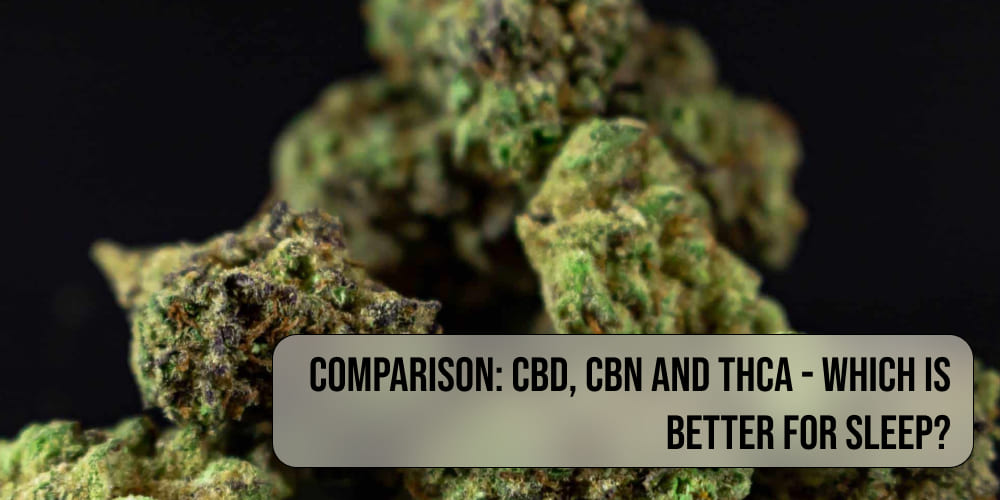
Ever wondered why some cannabis strains energize you, while others seem to gently lull you to sleep? The world of cannabinoids is full of such surprises, and today, we’re uncovering the secrets of three often associated with the realm of Morpheus: CBD, CBN, and THCA. Forget dry lectures – this exploration will be light yet informative, helping you choose your ideal companion for slumber. Get ready for a fascinating, short journey into the chemistry of sleep!
At first glance, these acronyms might resemble a secret code, but they are actually keys to understanding how cannabis interacts with the body. CBD (cannabidiol) has already achieved stardom thanks to its calming, non-psychoactive properties and its ability to influence our internal balancing system. CBN (cannabinol) is often called the “sleepy gentleman,” whose sedative charm unfolds as cannabis ages. Finally, THCA (tetrahydrocannabinolic acid) is the raw, “unawakened” precursor to the famous THC. While not psychoactive in its raw form, it possesses its own unique set of beneficial properties for quality rest.
- CBD offers calm without the “high,” assisting with anxiety and insomnia.
- CBN emerges from “aged” THC and is renowned for its potent sedative potential.
- THCA is “raw” THC, non-psychoactive, yet boasts unexpected talents for sleep improvement.

CBD: Quiet Calm for a Restless Mind
CBD, or cannabidiol, is a true champion among cannabinoids, especially when it comes to well-being without any euphoria. Imagine it as a soft, soothing embrace for your nervous system. When it comes to sleep, CBD doesn’t force you into slumber like a strict nanny. Instead, it works much more subtly, like a skilled conductor tuning the orchestra of your endocannabinoid system to a harmonious melody of relaxation. This helps the body and mind find their natural rhythm, conducive to peaceful sleep.
CBD’s mechanism of action for sleep lies in its ability to interact with various receptors in the brain, including those that regulate mood and anxiety, such as serotonin receptors. If your mind constantly “chews over” daily worries, preventing you from falling asleep, CBD can become your faithful ally. It doesn’t make you sleep, but rather removes the “noise” and “disturbances” that hinder the natural process of falling asleep. It’s like cleaning your glasses to make the world clearer – CBD helps your mind see the path to sleep without unnecessary obstacles.
- CBD can be a savior for those whose insomnia stems from anxiety and stress.
- It gently interacts with your internal balancing system, bringing it into order.
- CBD is non-addictive and an excellent choice for daily use.
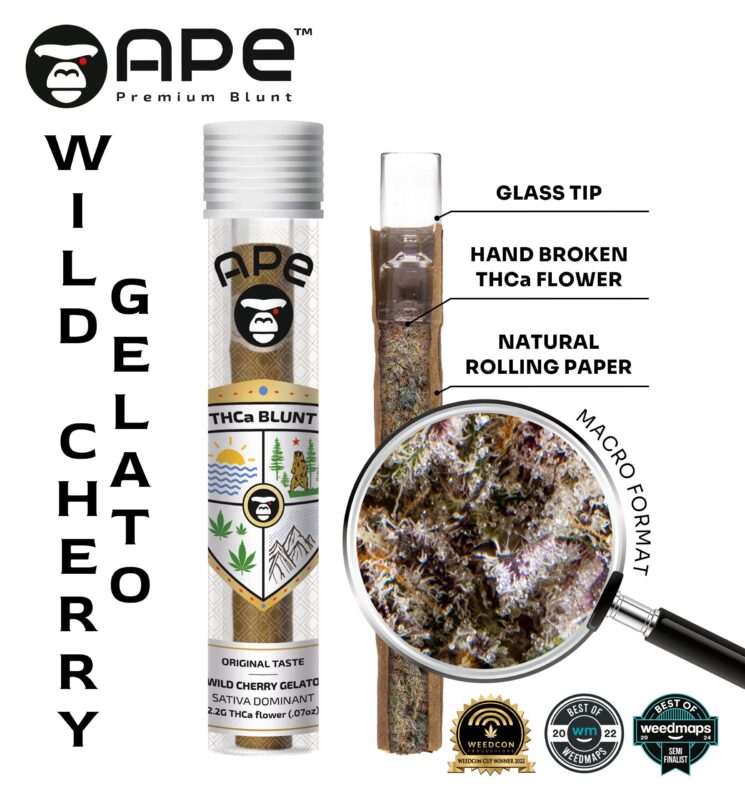
Wild Cherry Gelato – APE THCA BLUNT 2.2G
$19.99
The Luxury Chill
Wild Cherry Gelato is a hybrid strain that provides a perfect balance of relaxation and uplifting effects. With 33% THCA, this strain offers a powerful yet smooth high that eases both the body and mind. Whether you're enjoying a quiet evening or looking to add a touch of luxury to your day, Wild Cherry Gelato is the ideal choice.
Flavor & Vibe:
- Sweet cherry with creamy gelato and earthy undertones
- Euphoric, relaxing, and smooth
- Enhances mood and promotes relaxation
- Relieves stress and tension, helping you unwind in style
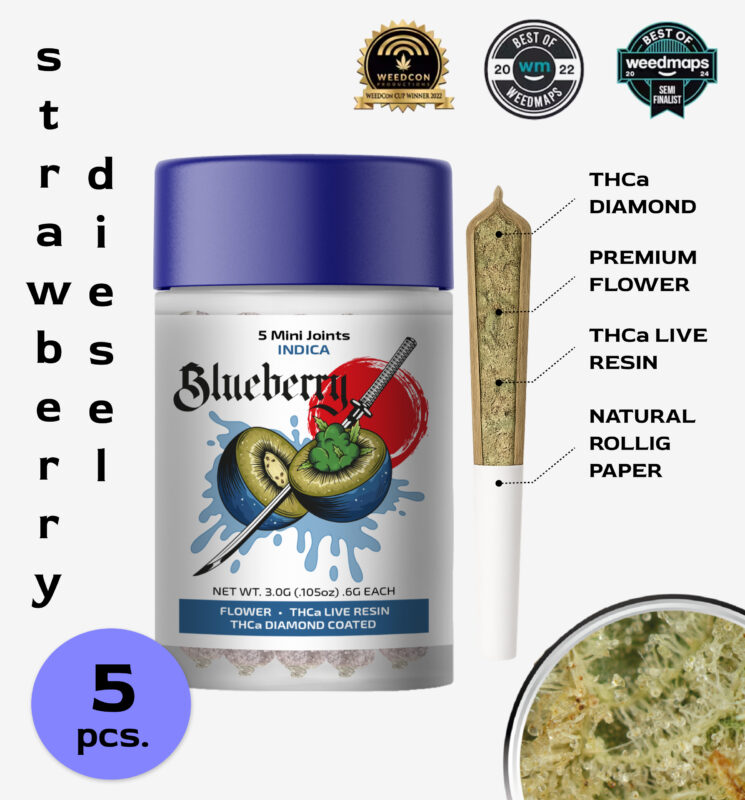
Blueberry 5mini joints – 3g-THCa Live Resin Infused + THCa Diamond Coated
Original price was: $39.99.$23.00Current price is: $23.00.
Blueberry 5 Mini Joints 3g – THCa Live Resin Infused + THCa Diamond
Flavor & Vibe:
- Sweet blueberry with earthy, smooth undertones
- Uplifting, refreshing, and relaxing
- Enhances creativity and mental clarity
- Boosts mood and provides soothing relaxation
- Relieves stress and promotes calmness
- Creative brainstorming or artistic sessions
- Social gatherings or casual hangouts
- Relaxing after a busy day or evening unwinding
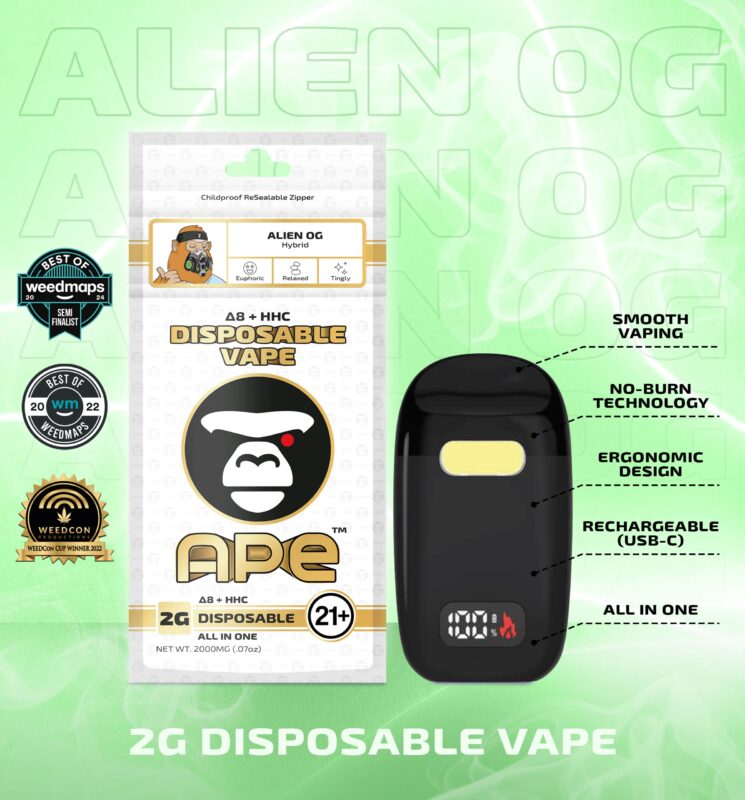
Alien OG THCa Disposable 2g APE
$25.99
Alien OG THCa Disposable 2G by APE
Relax and Recharge
Alien OG is a renowned indica-dominant strain that provides a deeply relaxing experience. Infused with high-potency THCa, this 2G disposable vape delivers a smooth, calming sensation that helps relieve stress while keeping your mind clear and at ease. Ideal for those seeking unwinding after a long day, Alien OG is your go-to for a soothing, stress-free experience.Flavor & Vibe
🌲 Taste: Earthy pine with citrus hints 😌 Effects: Calming, stress-relieving, and mood-elevatingWhat It Does
💭 Soothes the body and calms the mind 🌙 Promotes relaxation and mental clarity 💨 Delivers smooth, flavorful hits for the ultimate unwind
Watermelon Nerdz THCA Smalls Flowers APE
Price range: $49.99 through $89.00
Sweet and Creative
With 32% APE THCA, Watermelon Nerdz – Smalls Flowers delivers an uplifting and creative high that clears the mind, sharpens focus, and promotes relaxation. It's the perfect companion for productive moments or unwinding after a long day.
Flavor & Vibe:
- Sweet watermelon with tangy candy and earthy undertones
- Uplifting, creativity-enhancing, and relaxing
- Boosts creativity and elevates mood
- Relieves stress and relaxes the body
- Provides mental clarity and improved focus
CBN: The Trusted Ally for Deep Slumber
CBN, or cannabinol, is a cannabinoid often dubbed the “sleeping aid” or “sedative.” And there’s good reason for that. Unlike CBD, which is a “primary” cannabinoid, CBN forms as a result of THC’s “aging” and degradation. Think of cannabis like a fine wine: the longer it’s stored, the more CBN it develops, and the stronger its relaxing properties become. Perhaps you’ve noticed that older, well-cured cannabis strains induce greater relaxation and drowsiness – that’s CBN at work.
While research into CBN is still in its early stages, anecdotal evidence and preliminary data point to its potent sedative potential. It is believed that CBN can influence the central nervous system, promoting feelings of deep relaxation and pleasant drowsiness. Some users report that CBN not only helps them fall asleep faster but also significantly improves the overall quality and duration of sleep. This can be a true salvation for those battling chronic insomnia or simply dreaming of a truly deep and restorative sleep that leaves them feeling completely refreshed.
- CBN is a product of THC’s breakdown, so its concentration is higher in aged cannabis.
- It exhibits more pronounced sedative effects compared to CBD, making it an excellent choice for insomnia.
- CBN can be your ticket to faster sleep onset and higher quality nocturnal rest.

THCA: The Unexplored Potential of Raw Cannabis
THCA, or tetrahydrocannabinolic acid, is essentially the “parent” form of the famous THC. It is found in raw, unprocessed cannabis and, importantly, does not possess psychoactive properties. This means that consuming raw cannabis won’t produce the “high” associated with THC. For THCA to convert into psychoactive THC, a process called decarboxylation (heating) is required. But don’t assume that the absence of euphoria makes THCA useless; on the contrary, it has its own unique and valuable properties, especially in the context of sleep. Some studies suggest that THCA can be a potent anti-inflammatory and neuroprotective agent.
How does THCA aid sleep if it doesn’t directly induce drowsiness? Its action is more subtle and often indirect. Imagine your insomnia is caused by pain or inflammation – a constant background discomfort preventing you from relaxing. This is where THCA steps onto the scene with its anti-inflammatory properties, helping to reduce pain and thereby eliminating one of the main culprits behind restless sleep. When the body feels more comfortable, it’s much easier to relax and drift into sleep. Additionally, THCA may contribute to overall well-being, which also indirectly influences sleep quality, as feeling good is half the battle for sound sleep.
- THCA is the non-psychoactive “precursor” to THC, found in raw cannabis.
- Its potential anti-inflammatory properties may help reduce pain that disrupts peaceful sleep.
- THCA can improve overall well-being, indirectly contributing to better sleep quality.
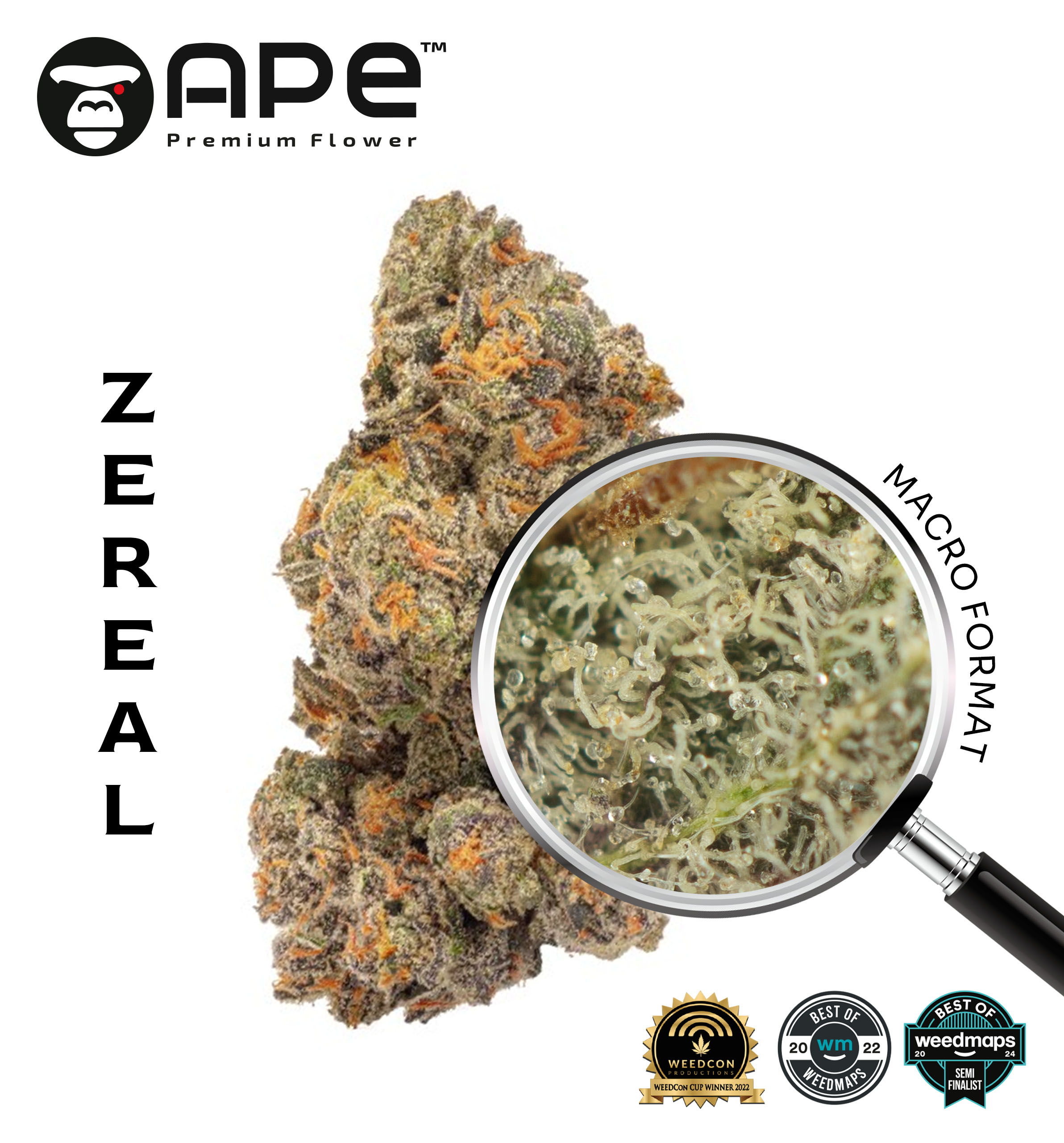
Zereal THCA Flower APE
Price range: $19.99 through $119.99
Sweet and Balanced
With 32% THCA, Zereal provides an engaging, creative high that doesn't overpower the senses but offers the perfect balance of energy and relaxation.Flavor & Vibe:
- Sweet, fruity cereal flavor with floral undertones
- Uplifting, creative, and soothing
What It Does:
- Enhances creativity and focus
- Boosts mood and provides gentle relaxation
- Relieves stress and promotes calmness

Wild Cherry Gelato THCA Smalls Flowers APE
Price range: $49.99 through $89.99
The Luxury Chill
With 33% THCA, Wild Cherry Gelato Smalls offers a potent yet well-balanced high that relaxes the body while uplifting the mind. Its versatility makes it perfect for any time of day, whether you're seeking creative inspiration or unwinding in style.
Flavor & Vibe:
- Taste: Sweet cherry and creamy gelato with earthy nuances
- Feel: Euphoric, relaxing, and delightfully smooth
What It Does:
- Elevates mood and promotes deep relaxation
- Relieves stress and melts away tension
Watermelon Nerdz THCA Smalls Flowers APE
Price range: $49.99 through $89.00
Sweet and Creative
With 32% APE THCA, Watermelon Nerdz – Smalls Flowers delivers an uplifting and creative high that clears the mind, sharpens focus, and promotes relaxation. It's the perfect companion for productive moments or unwinding after a long day.
Flavor & Vibe:
- Sweet watermelon with tangy candy and earthy undertones
- Uplifting, creativity-enhancing, and relaxing
- Boosts creativity and elevates mood
- Relieves stress and relaxes the body
- Provides mental clarity and improved focus

Kandy Mintz THCA Smalls Flowers APE
Price range: $49.99 through $89.00
Comparing Sleep Effects: Which Cannabinoid to Choose?
Now that we’ve met each of our heroic cannabinoids, the most crucial question arises: which one is best for sleep? And here, as often happens with cannabinoids, there isn’t a single “one-size-fits-all” answer. The choice depends on individual needs and what precisely is preventing you from sleeping. Imagine having different reasons for insomnia, each requiring a specific key. If your sleep is disrupted by anxiety, stress, or an overactive mind, and you’re seeking a mild, non-psychoactive solution to help you relax, then CBD is your number one candidate. It will gently soothe your nervous system, like a tender lullaby, preparing you for slumber.
If you’re seeking a more pronounced sedative effect to fall into a deep sleep faster and sleep like a baby, then your attention should turn to CBN. Its powerful “sleep-inducing” potential makes it appealing for those battling severe insomnia or simply wanting to ensure the most profound and restorative night’s sleep possible. Finally, if your insomnia is a constant companion due to chronic pain or inflammation, THCA can offer a unique approach. By reducing physical discomfort, THCA allows your body to relax, enabling you to drift off to sleep without pain.
- CBD is ideal if your insomnia is caused by anxiety or stress, providing gentle relaxation.
- CBN is the choice for those seeking a strong sedative effect for quick and deep sleep.
- THCA can be beneficial for sleep improvement by reducing pain and inflammation.

Combining Cannabinoids: Synergy for Ideal Sleep
Sometimes, to achieve the best results, it’s not about choosing one, but about combining efforts. In the world of cannabinoids, this phenomenon is known as the “entourage effect” or synergistic effect, where different cannabis compounds work together, enhancing and complementing each other’s actions. Imagine not just playing one instrument, but conducting an entire orchestra, where each note contributes to a perfect symphony. Applied to sleep, this means that a thoughtful combination of CBD, CBN, and THCA can offer a more comprehensive and powerful approach to improving your nightly rest.
For example, you might start your day with CBD to lower overall anxiety and stress, preparing your body for a peaceful night. An hour or two before bed, you could take a dose of CBN to achieve that desired, deep sedative effect that aids rapid sleep onset. And if you’re experiencing nightly pain or inflammation that disrupts your sleep, THCA products can be an excellent addition, helping to manage physical discomfort. This multi-faceted approach allows you to tackle insomnia from all angles, leveraging the unique capabilities of each cannabinoid to achieve the most effective and restorative sleep.
- Combining CBD and CBN can significantly enhance relaxation and sedation, leading to deeper sleep.
- Adding THCA to the blend may help if pain is the cause of insomnia, offering additional relief.
- Experimenting with different ratios of these cannabinoids can help you discover your unique formula for ideal sleep.
[Jealousy THCa strain]
[Top 5 THCA Strains for Relax]
[Cherry Gumbo Strain]

Pre-sale 2oz APE THCA Flower Smalls
$99.00🔥 Pre-Sale: 2oz APE THCA Flower – Only $99! 🔥
Don’t miss your chance to grab this exclusive APE THCA Flower pre-sale offer!
Order now before November 30th, 2025 and get 2 ounces of premium APE THCA Flower for just $99!
🌿 Premium Quality:
APE THCA Flower delivers fresh, aromatic, and potent buds cultivated by top-tier growers for a truly elevated experience.
💰 Pre-Sale Savings:
Place your order before November 30th to lock in your special discount and secure your 2oz at this unbeatable price!
🚚 Delivery Date:
All pre-orders will be shipped and delivered on December 10th, 2025, ensuring your product arrives fresh and ready to enjoy.
Dosage and Application Methods: Find Your Sweet Spot
Determining the ideal dosage and method of application for cannabinoids to aid sleep is an art that requires patience and attentiveness to your own body. Forget about “magic” universal doses, as each individual is unique and responds to cannabinoids differently. The golden rule is always to start with a low dose and gradually, very slowly, increase it until you find the balance that works best for you. It’s like fine-tuning a precise instrument – subtle adjustments are needed to achieve the perfect result. It’s crucial to listen to your body’s signals and observe its reactions.
Regarding application methods, there’s also a wide range of choices. Oils and tinctures, taken sublingually (under the tongue), provide relatively fast absorption and a fairly long-lasting effect, which is convenient for maintaining calm throughout the night. Capsules are the choice for those who value convenience and precise dosing, though their effects take longer to manifest as they must pass through the digestive system. If you need an almost immediate effect, for instance, to quickly alleviate an episode of anxiety before bed, vaporization or smoking can be considered.
However, it’s important to remember here: when heated, THCA converts into psychoactive THC, which might not be what you’re seeking for sleep. Choose the method based on how quickly you need the effect and which is most comfortable for you.
- Always start with a low dose and gradually increase it to find your optimal “sleep dose.”
- Consider different application methods: oils for a fast yet lasting effect; capsules for precise dosing; vaporization for immediate action.
- Keep a sleep journal to track how different dosages and combinations affect your rest, helping you find the perfect solution.

Important Considerations and Purchase Tips
Before diving headfirst into the world of cannabinoids in search of ideal sleep, there are several critically important points to consider. Firstly, quality is paramount. Always, without exception, choose products from reputable manufacturers who openly provide third-party lab test results (COA). This guarantees that the product is pure, safe, free of harmful contaminants, and most importantly, contains the precise amount of cannabinoids claimed on the label. Think of it like checking a product’s credentials – you want to be sure you’re getting exactly what’s advertised, right?
Secondly, remember that cannabinoids are not a magic bullet capable of solving all sleep problems instantly. If you are suffering from severe or chronic insomnia that has persisted for a long time, it is highly recommended to consult a doctor. Cannabinoids can be an excellent addition to your sleep improvement plan, but they are not a substitute for professional medical advice and diagnosis. Finally, be patient. The effects of cannabinoids may not be immediate, and it might take some time for your body to adapt and for you to find the ideal combination and dosage. Sleep is a delicate process, and it should be approached with the same care and respect.
- Always prioritize high-quality products from trusted brands, and demand third-party lab test results (COA).
- If you have severe sleep problems, always consult a doctor – cannabinoids can be part of the solution, but not the sole answer.
- Be patient in finding your ideal dosage and combination – results may not be immediate.